The RAV4 Hybrid did not become Australia's best-selling SUV by accident. But with waiting lists, a price that has crept up over the years and a wave of cheaper rivals, is it still the smart buy on the used lot?
What you are getting
A 2.5-litre petrol engine paired with Toyota's hybrid system, driving the front wheels or, on AWD models, adding a separate electric motor on the rear axle. There is no plugging in. Real-world fuel use in the mid-4s to low-5s per 100km is genuinely achievable in suburban driving, which is where the RAV4 does its best work.
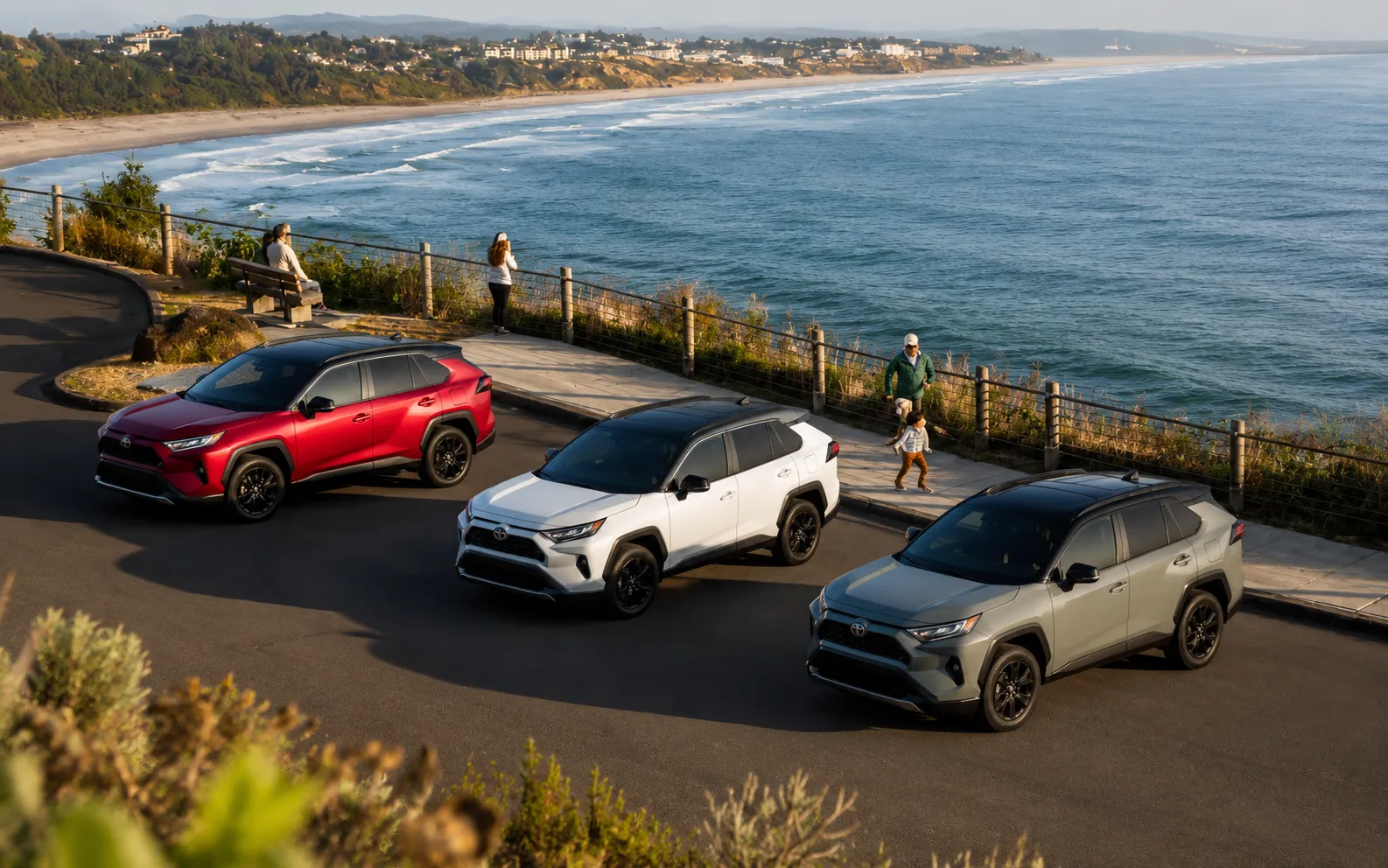
Living with it
The cabin is plain rather than plush, but it is roomy, sensibly laid out and hard-wearing. The boot is a good size, rear seat space is generous for a mid-size SUV, and visibility is excellent. It is quiet at low speed when running on electric power, though the engine gets vocal under hard acceleration — a trait of the CVT-style transmission.
It is not a car that rewards enthusiastic driving. The steering is light and numb, and the body leans in corners. What it does brilliantly is take the effort out of daily driving.
The honest downsides
Road noise on coarse-chip country roads is noticeable. The infotainment in earlier examples of this generation feels dated next to Korean and Chinese rivals. And because demand has been so strong, used prices have stayed high — you will not find a bargain.
Running costs
This is the RAV4's trump card. Fuel bills are low, Toyota's capped-price servicing keeps maintenance predictable, and the hybrid system has a long record of reliability in Australia. The battery is warranted for an extended period when serviced through the dealer network. Resale value is exceptional.
Verdict
Is it worth it? If you drive mostly in the city and suburbs and you plan to keep the car for years, yes. The fuel savings are real, it is easy to live with, and it holds its value better than almost anything in the class. If you do mostly highway kilometres, a good diesel or a plain petrol SUV may make more sense — the hybrid advantage shrinks at a steady 110km/h.
Buy on service history rather than on colour or kilometres. A well-maintained higher-kilometre example is a better bet than a neglected low-kilometre one.